
Summary
- As a top defense contractor, Northrop Grumman should benefit for the next decade because of the government's renewed commitment to having the strongest military capabilities integrated with the latest technology.
- The result of a 1994 merger of companies making significant contributions as far back as World War II, its history with the country's defense grant it a stiff competitive advantage.
- The company's latest CEO is the first female in the position. The cybersecurity and technology expert, groomed for years, aims to deliver “rapid capability development” aligned with the government's strategy.
- Its origins are rooted in the aspirations and innovation of its founders. But, in a company with tens of thousands of employees, innovation must flow from the company's culture. The latest acquisition, Orbital ATK, bolsters that culture.
- Northrop Grumman has a healthy backlog, real potential to be awarded more contracts for government programs and further opportunity for integration synergies with Orbital ATK. Its share repurchase authorizations and dividend growth history exhibit its shareholder-friendliness.
Northrop Grumman Story
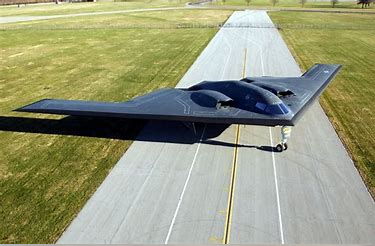
Jack Northrop is the original inspiration behind Northrop Grumman. Though only a high school graduate, he spent decades in the aeronautical industry designing and developing aircraft. His accolades include the designs of the Lockheed Vega (a civilian transport monoplane), the XB-35 (an experimental bomber based on the Flying Wing design), the P-61 Black Widow (the first American night interceptor), the F-89 Scorpion (an all-weather interceptor) and the YB-49 (a long-range bomber). His Flying Wing designs were eventually incorporated into the design of the B-2 Spirit (the Stealth Bomber). His inventions include intercontinental missiles and automatic celestial navigation systems.
After forming more than a half dozen companies, Mr. Northrop founded Northrop Aircraft in 1939 with the intent of focusing on research and development. But, World War II changed his plans and Northrop Aircraft spent its first years as a production company for aircraft components.
Twenty years later, Northrop Aircraft was led by Thomas Jones. The company produced training jets and basic fighters for more than thirty countries worldwide. In the late 1970's, Mr. Jones helped Northrop win the contract to design and build the B-2.
The company's namesake, Mr. Northrop, passed away in 1981, shortly after seeing the bomber's design but before the bomber's first flight in 1989. The B-2 entered service in 1997. The B-2 program transformed Northrop Aircraft from a minor aircraft designer and manufacturer to a top defense contractor.
Mr. Jones was also instrumental in steering Northrop toward outer space aspirations and unmanned technology. His appetite for risk led him to and, sometimes through, controversy. He resigned the company's top post in 1990 after being accused of falsifying the test results of a nuclear armed cruise missile’s guidance system.


