
Summary
- Media reports of the company and certain creditors retaining restructuring advisors sent the company's stock and bonds into a tailspin last week.
- Ongoing cost overruns at projects inherited from last year's ill-advised acquisition of Chicago Bridge & Iron could result in the requirement to restructure the company's debt under Chapter 11.
- With the company's 2024 bonds trading well below 30% of face value, it seems difficult to envision any meaningful recovery for equityholders in a potential restructuring.
- Hail mary attempt to sell its Lummus Technology unit likely to fail.
- $69 million interest payment due on November 1. Restructuring might happen sooner than most market participants currently envision.
Shares of ailing oil-and-gas engineering and construction company McDermott International (MDR) fell off a cliff last week after media reports of the company having retained turnaround consulting firm AlixPartners LLP "to advise on efforts to improve cash flow and stem a recent spate of net losses" emerged.
Last year's ill-advised acquisition of Chicago Bridge & Iron ("CBI") is now threatening to take down the combined company after massive losses in legacy CBI projects continue to mount.
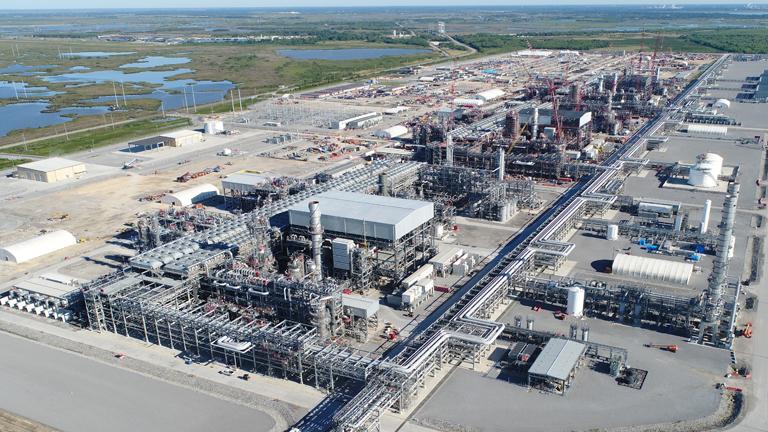
Photo: Cameron LNG Facility Construction Site at Hackberry, Louisiana - Source: Mitsui & Co.
Two months ago, McDermott reported an abysmal Q2/2019 and significantly reduced guidance for the remainder of the year. Management's projection for cash outflows to more than double from previous expectations to $640 million for FY2019 was perhaps the most troubling disclosure at that time.
In addition, the company continues to struggle to sell its industrial storage tank business and the remaining part of its pipe fabrication business with a transaction for the storage tank unit now expected in Q4/2019. Aggregate cash proceeds are now expected to be lower than the $1 billion previously estimated by management.
That said, on the conference call, management expressed its satisfaction with the company's cash on hand and available credit facilities of $1 billion in total and insisted on the company's liquidity profile being "adequate" a number of times.
The big question is: If the company's liquidity profile remains adequate and additional cash soon being provided by the imminent sale of the storage tank business, what is the recent fuss all about?

